Jun 08, 2026 · 7 min read
How to zero a rifle scope in 20 rounds
A clean range routine for zeroing at 25, 50 and 100 yards. Bore sight, group, adjust, confirm. Bring the printable sight in target and you are done before lunch.
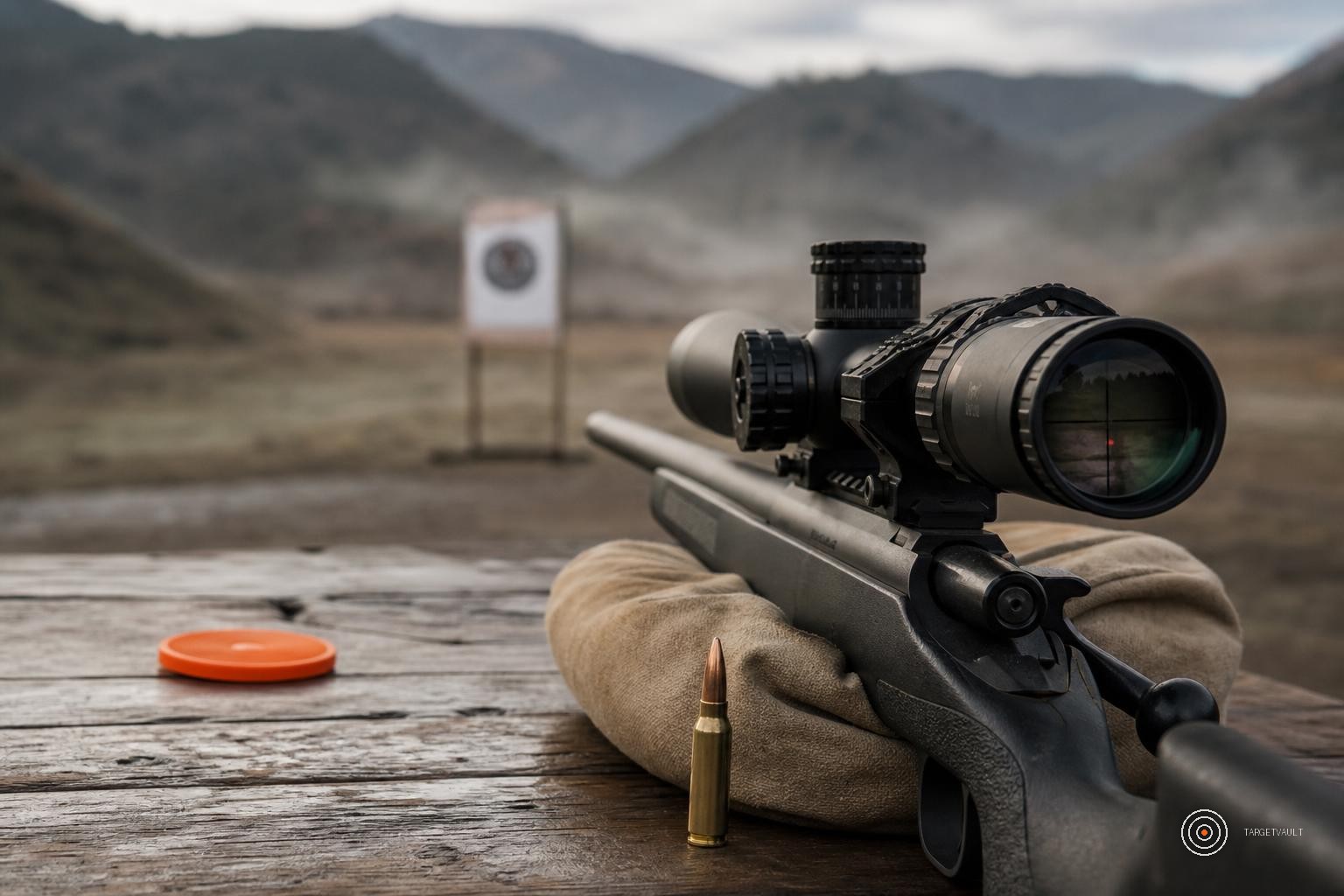
Zeroing a scope sounds intimidating until you do it once. Most rifles only need a bore sight at home, two short groups at 25 yards, and a confirmation group further out. That is 15 to 20 rounds, not half a case. Grab a 1 inch grid sight in target, a solid rest, and read on.
What zero actually means
Your bullet travels in an arc. Your scope looks in a straight line. Zeroing lines the two up so that at one chosen distance, point of aim equals point of impact. For a 5.56 or .308 service rifle, a 50 yard zero is also roughly on at 200, which is the sweet spot for general use. Bolt action hunting rifles are usually zeroed at 100.
What you actually need
A stable rest matters more than fancy ammo. Bipod and rear bag, a lead sled, or a stack of sandbags. Beyond that you want the load you will actually shoot for the rest of the year, a printed 1 inch grid target in A3 if your range allows it, a torque wrench for the rings, and your hearing and eye protection. That is the whole list.
Step one. Bore sight at home
Pull the bolt. Set the rifle on a rest. Look down the bore at something obvious 25 yards out, a doorknob or a light switch. Without moving the rifle, twist the turrets until the reticle sits on the same spot. This costs nothing and usually saves a magazine of ammo on the line.
Step two. Group at 25 yards
Fresh target. Three shots, slow, from a solid rest. Do not chase shots between rounds, you are reading the rifle, not your last flier. Measure the group center to the bullseye in inches. Most scopes click 1/4 MOA, which is about 1/16 of an inch at 25 yards, so it takes a chunk of clicks. Dial the correction, fire another three to confirm, and you are basically zeroed.
Step three. Confirm at 100
A 25 yard zero on a 5.56 with a 1.5 inch sight height lands roughly 2 inches low at 100 and back on at 200. For a true 100 yard zero, move the target out and run the same three shot routine. At 100, 1 MOA is about 1 inch, so the math gets easy. Two groups should do it.
The mistakes that waste ammo
- Shooting singles instead of groups. You are chasing wobble, not the rifle.
- Loose rings. Torque to spec before you blame the optic.
- Switching loads halfway through. Point of impact moves with the bullet.
- Cleaning the barrel between groups. Fire a fouling shot first or skip it.
Need a target right now? Head to the library and grab a free A4 sight in sheet, or check the common questions.
Print it, shoot it.
Free printable targets in A4 or A3, ready for the range.
FAQ
How many rounds does a zero usually take?
Can I zero indoors at 25 yards?
Should I zero at 50 or 100?